

Most commercial booths need new fabric and foam every three to five years. How soon depends on foot traffic.
The frame is a different story. A well-built booth can stay in service far longer than that. What decides it is how it was built, what it was upholstered in, and how it gets cleaned and used.
Here’s what to look at if you want to know where your booths stand.
The short answer
A commercial booth has three parts that age at different speeds. The fabric goes first, then the foam. Both usually need a refresh every three to five years, depending on how much traffic the booth sees. The frame could last 20 years.
That’s why a whole booth rarely needs to be replaced. Most of the time, only the soft parts have run out.

The frame sets the ceiling
A booth is only as good as what’s underneath it. Kiln-dried hardwood frames, properly jointed and blocked, hold their shape under daily use for years. Softwood and engineered frames loosen, creak, and sag much sooner.
You can’t see the frame from the dining room. That’s why it’s the first thing to ask about before you order.
Foam is the part nobody checks
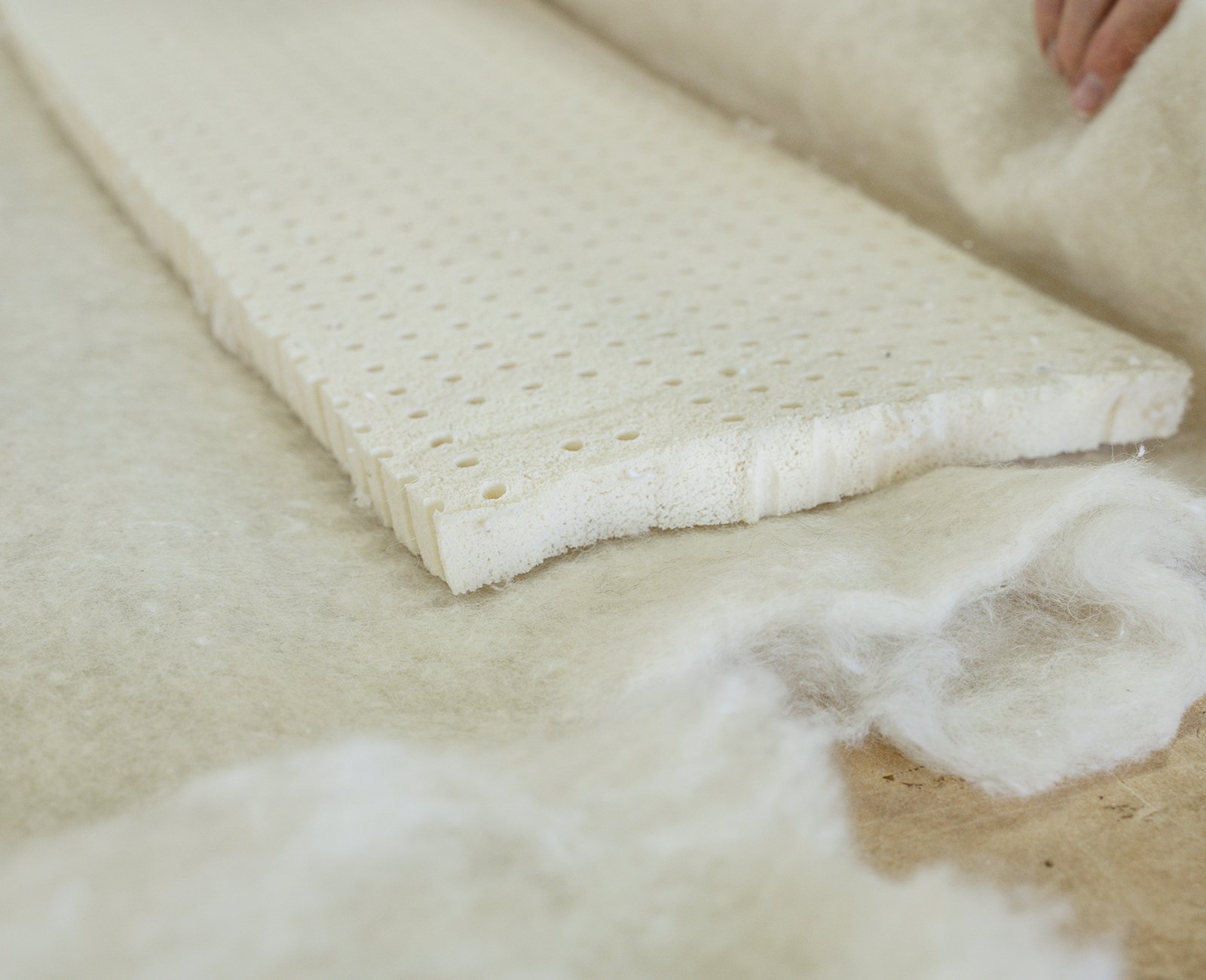
Foam compresses over time. Guests sit in the same spots every day, and the seat slowly loses its shape. A booth can look fine and still feel flat.
Dense commercial foam holds up longer than the foam used in residential seating. When a booth feels tired before it looks tired, the foam is usually why.

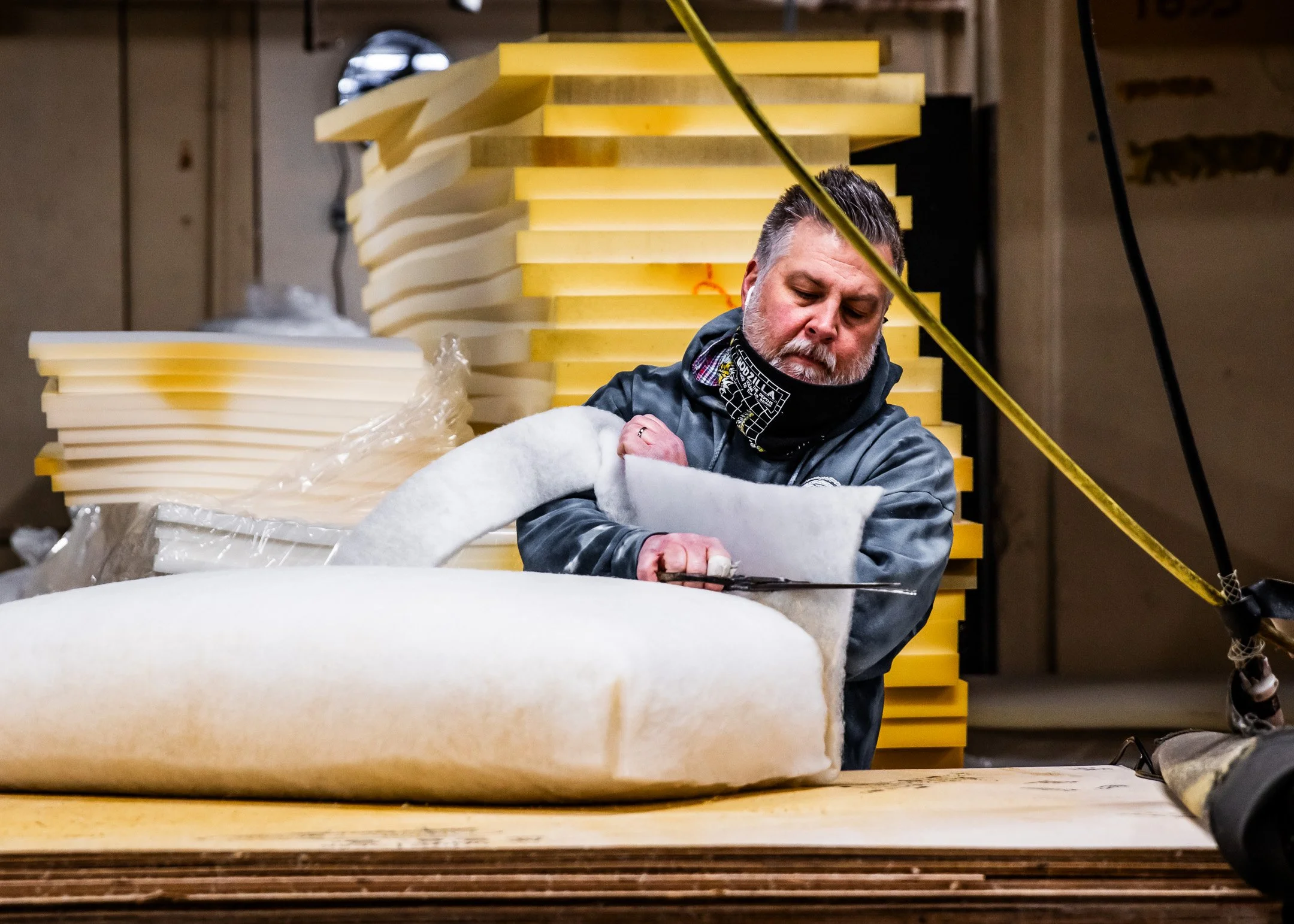
Reupholstered for a Restaurant in Columbus Ohio
Fabric is what guests see first
Fabric is the first part to show wear. It takes the spills, the cleaning products, the belt buckles, and the sun from the front windows. A fabric rated for commercial use lasts longer than one that isn’t, and the cleaning routine matters just as much as the rating.
If you want the full breakdown, read our guide on how to choose the right fabric for commercial upholstery.
Traffic and cleaning change the math
A booth in a coffee shop that turns tables all day will land closer to three years. A booth in a quieter hotel lounge can stretch toward five. A booth wiped down with harsh cleaners ages faster than one cleaned with the right product.
Two booths built the same way can wear very differently depending on where they live. Plan for the space, not the average.
Why booths outlast the chairs around them
Chairs get dragged, tipped, and stacked. Booths stay put. There are no moving parts and no legs to loosen.
And when a booth wears out, you don’t have to replace it. You can reupholster it. That’s a big reason a well-built booth stays in a dining room long after the chairs around it have been replaced.
Signs your booths are due
Look for seams that are splitting, fabric that’s cracking or pilling, seats that feel flat, and a frame that moves when you push on it. The first three are soft goods, and they’re fixable. The last one tells you something about the frame.
If the frame is solid, reupholstery usually costs a fraction of replacement.
How to make a booth last longer
Start with the right build. Pick a fabric rated for your traffic. Clean it with products the fabric can handle. Fix small tears early before they spread. Plan a reupholstery cycle into your budget, every three to five years for busy rooms, instead of waiting for an emergency.
Booths that get that kind of care are the ones that stay in the room for years.
Why Fortner is Your Partner
Ready to start? Tell us about your project at Start a Project. If you want to browse first, check out the custom catalog and the quick ship collection.
Fortner provides commercial reupholstery services for restaurants, hotels, senior living, retail, and campus environments. Based in Columbus, Ohio. We do on-site assessments and schedule work around your hours. If your seating needs attention, start the conversation today.
Contact us today to refresh your space.