
What Custom At-Scale Manufacturing Actually Means, and Why It Matters for Multi-Location Brands
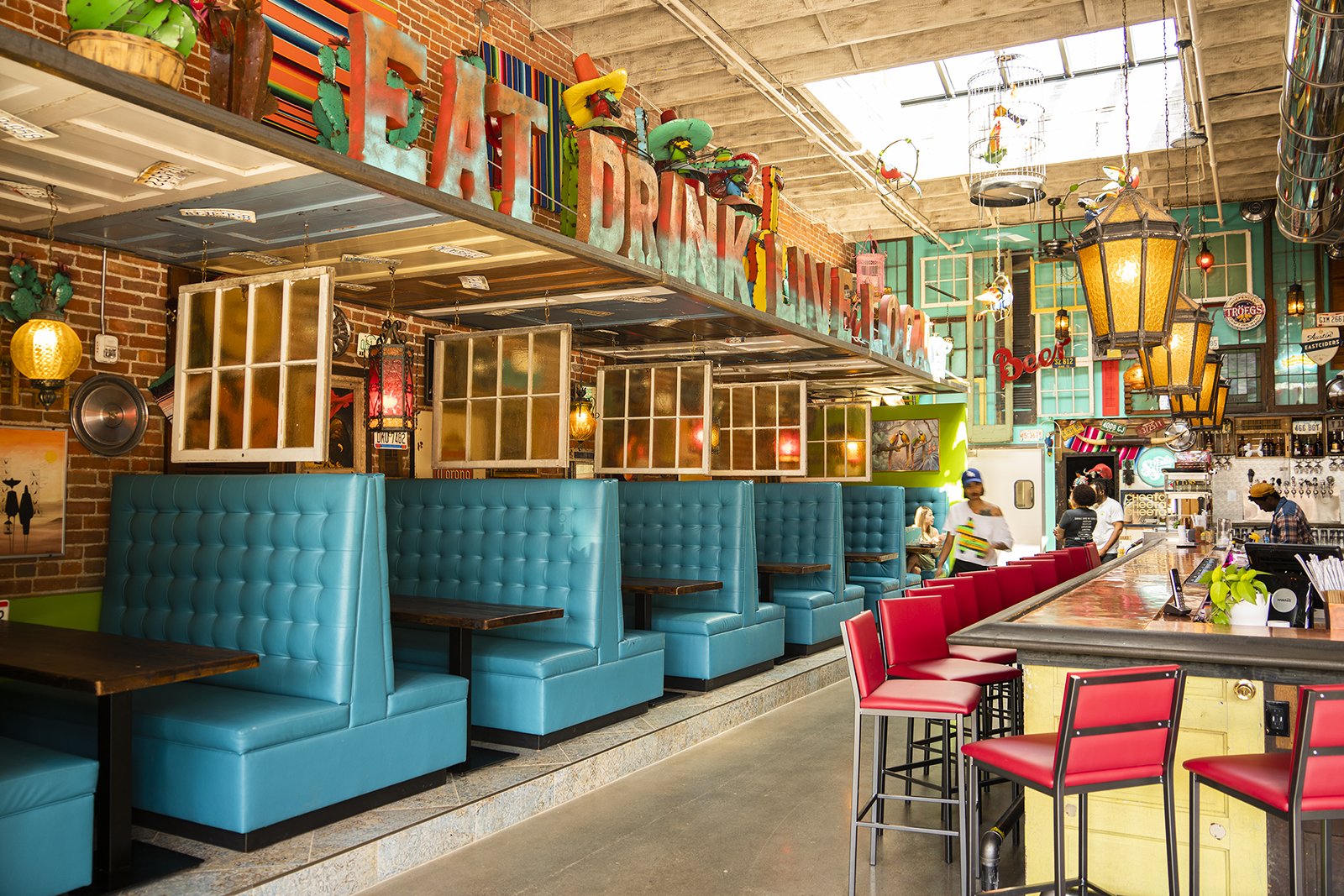
Penelope banquette, built for daily dining room use. Crafted by hand in Columbus, Ohio.
Opening a second location is different from opening a first. Opening a tenth is different still. At some point, the way you spec and source furniture has to change. Not because your standards drop, but because the process has to work across more variables without losing what made the first space feel right.
That's where most furniture suppliers fall short. They can do small and custom. Or they can do large and standardized. Very few can do both at the same time, at the same quality level, across a portfolio of spaces that each have their own dimensions, design intent, and operational demands.
Fortner has been doing exactly that since 1929. Here's what it actually takes.
Every location is different. The furniture has to be too.
A coffee shop brand opening its 15th location doesn't have 15 identical rooms. Corner units have different walls. One space has a low ceiling and needs lower-back banquettes. Another has a long perimeter wall that needs a continuous run of seating. A third has a tight entrance that changes how pieces need to be brought in and installed.
Off-the-shelf furniture ignores all of that. It arrives in standard sizes and fits where it fits. The space works around the furniture instead of the other way around.
Custom at-scale works differently. Each piece is built to the actual dimensions of the space it's going into. The seating fits the room. The room reads as designed, not assembled from a catalog.
Consistency across locations is the hardest part. And the most important.
For any multi-location brand, the interior is part of the product. Guests who visit location three and then location seven should feel the same thing. The seating should look the same, feel the same, and hold up the same.
That consistency is hard to achieve with custom work unless the manufacturer has the systems to support it. It requires keeping the exact specifications on file, maintaining the same material sourcing across production runs, and building every piece to the same standard regardless of how many units are in the order.
Fortner keeps full production records for every project. When a client opens a new location, we pull the original spec, confirm what needs to stay the same and what needs to adapt to the new space, and build accordingly. The brand stays consistent. The furniture fits the room.
Retail and specialty brands have different demands than hospitality.
A hotel can absorb a reupholstery cycle every several years. A high-volume retail fitting room or lounge sees a different kind of wear. Seating in a retail environment gets used in short, intense bursts by guests who are not sitting down to relax. They're trying things on, waiting, moving.
The construction spec for that environment reflects it. Frames need to handle repeated impact without loosening. Fabric needs to stay clean under constant contact. The piece needs to look sharp because it's in a space where every detail is curated, and worn seating reads as a brand miss.
Fortner builds for that reality. We've worked with national retail brands on fitting room seating, lobby benches, and lounge areas across dozens of locations. The spec is developed once, refined together, and then executed consistently across the rollout.

Custom curved banquette seating built for a high-traffic commercial space. Made in Columbus, Ohio.
Coffee shops and fast-casual concepts need speed without sacrificing fit.
A coffee brand opening multiple locations in a single year doesn't have time for a 16-week lead time on every build. But they also can't afford seating that doesn't fit the space or fails inside the first year.
Fortner's quick-ship collection handles the time pressure. Our catalog pieces can be customized to fabric and finish, produced in 6 to 8 weeks, and scaled across a multi-unit rollout without the lead times that fully bespoke work requires.
For concepts with tighter timelines, we work with the design team early. We nail the spec on the first location, then use that as the production standard for every location that follows. The first build takes the most time. Everything after it moves faster.

Emma banquettes for every space imaginable. Multiple sizes to chose from.
Designing for maintenance from the start changes the math.
The furniture decision isn't just about what goes in on opening day. It's about what the space looks like in year three, year five, and year ten. For a brand managing 20 or 50 locations, the cost of replacing seating that wasn't built to last adds up fast.
Fortner designs commercial seating with the full lifecycle in mind. Frames built to last decades. Fabric selected for the actual cleaning protocol the location uses. Construction that allows for reupholstery when the soft goods wear out, without touching the structure.
We also keep material specs on file after delivery. When a location needs a refresh, we match the original fabric, foam, and finish exactly. The updated piece sits next to the original and reads the same. For a brand where visual consistency is part of the product, that matters.
The partner relationship is the infrastructure.
For a single-location operator, the furniture decision ends at delivery. For a growing brand, it doesn't. New locations keep opening. Existing locations need maintenance. The brand evolves and the spaces need to evolve with it.
Fortner isn't a vendor that processes orders. We're a production partner that stays in the project. That means the design team has someone on the manufacturing side who already knows the brand, the spec, and the history of every piece we've built together.
For brands scaling from one location to twenty, that continuity is worth more than a lower unit price on furniture that won't hold up or that a supplier won't remember building in two years.
Why Fortner is Your Partner
Fortner builds custom commercial seating at scale for multi-location hospitality brands, retail concepts, coffee shops, and commercial developers. Based in Columbus, Ohio. If you're planning a rollout, the earlier we're in the conversation, the better the outcome.
Start a Project
Explore the Fortner Furniture Collection
Contact us today to refresh your space.