

How to Reupholster Your Restaurant or Hotel Seating Without Shutting Down

Restaurant Reupholstery with no down time for The Pearl in Columbus, Ohio.
Most restaurant and hotel operators know their seating needs work. The fabric is worn. The cushions have lost their shape. The look is dated.
What stops them from moving on it isn't cost. It's the assumption that doing something about it means closing. Taking sections offline. Disrupting service. Turning away covers during the work.
For most commercial reupholstery projects, that's not how it works. Here's what the process actually looks like, and why most operators can get their seating refreshed without missing a shift.
The furniture doesn't have to leave the building
On most commercial booth and banquette seating, the frame stays bolted to the floor. Only the upholstered seat and back panels come off. A craftsman removes the worn fabric, replaces the foam if needed, recovers the panels with new material, and reinstalls them.
The whole process happens in place. No truck pulling up to haul furniture away. No warehouse waiting period. No gap in your dining room where seating used to be.
This is the part most operators don't know until they ask. The assumption that reupholstery means furniture leaving the building comes from residential work, where pieces go to a shop and come back weeks later. Commercial reupholstery, done right, is a different process.
Work gets scheduled around your hours
A good commercial reupholstery crew works when you're not open. Before the first cover of the day. After the last table clears. Overnight if the project calls for it.
For a dining room with a standard run of booth seating, that schedule usually means a section gets done overnight, reinstalled before morning, and the room opens normally. You wake up to finished seating. Your guests have no idea work happened.
Larger projects, like a full hotel dining room or a multi-section restaurant refresh, get batched. One section at a time, on a schedule that keeps the rest of the room running. The dining room never fully closes. It just rotates through a refresh.
What actually needs to come out of service
There are situations where a piece has to come offline temporarily. A booth built as a fully integrated single unit, where the seat and back are one welded structure, may need to be pulled entirely. A piece with significant frame damage needs repair work before recovering, which takes more time.
A reputable shop will tell you this upfront during the assessment. They'll look at how the pieces are constructed, flag anything that requires more involved work, and build a schedule around what can stay in service versus what needs to come out.
The goal is to keep as much of your dining room running as possible. That's not a favor. It's just how the work gets planned.
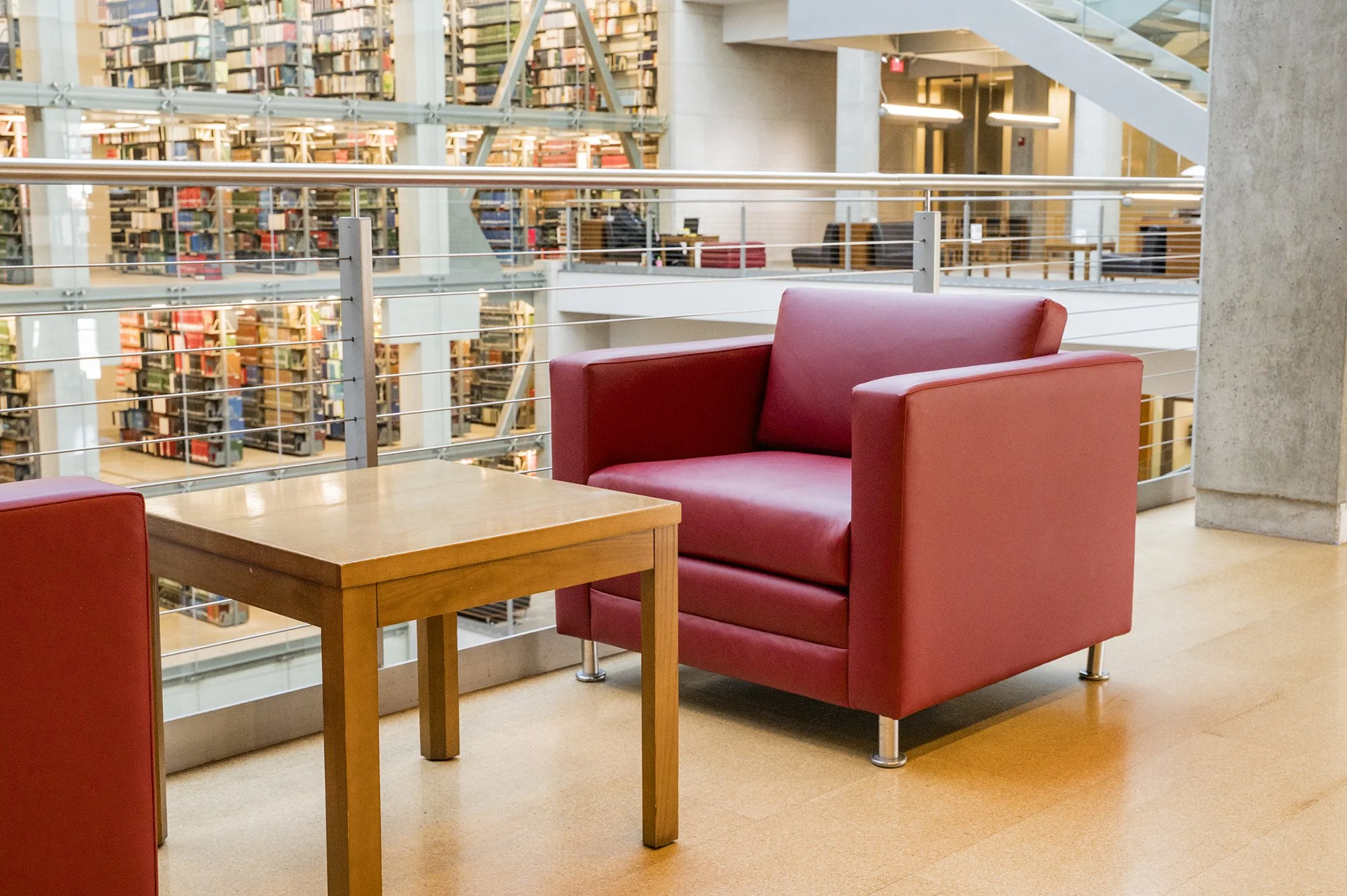
Reupholstery for a local university.
The assessment is where the whole project gets figured out
Before any work starts, someone from the shop should walk the space with you. They're looking at how the frames are built, what condition the foam is in, whether any structural repair is needed, and what the right fabric spec is for your environment.
That walkthrough determines the scope, the schedule, and the cost. It also tells you whether reupholstery makes sense or whether any pieces are past the point of being worth recovering.
Fortner does on-site assessments for commercial reupholstery projects. We walk the space, look at the construction, and give you a straight answer on what makes sense and what doesn't. If a piece isn't worth recovering, we'll tell you that too.
Matching the original spec matters more than most people expect
One thing that catches operators off guard is fabric matching. If you're refreshing part of a dining room but not all of it, the new fabric needs to match the existing pieces closely enough that the room reads as consistent.
A shop that keeps production records can match original specs on file. The fabric source, the color, the foam density. When a piece comes back from a reupholstery job, it should sit next to the original seating and look like it was done at the same time.
Fortner keeps full records on every project we build and every project we reupholster. When a client comes back for a refresh two years later, we pull the original spec and match it exactly.
Hotel seating runs on the same logic
Hotel lobbies, restaurant outlets, bars, and lounge areas all have seating that takes constant use. The same batched, off-hours approach that works for a restaurant works for a hotel.
The difference is scale. A hotel with multiple outlets can stagger the work across properties or across departments. The lobby bar gets done while the restaurant outlet runs. The dining room gets refreshed over a series of early-morning calls before breakfast service opens.
Fortner has worked with hotel groups across Ohio and beyond on phased refresh programs. The goal is always the same: get the seating looking right without the property feeling the disruption.
Senior living, healthcare, and campus dining work the same way
Any environment where seating runs all day and closing isn't an option operates on the same model. Senior living dining rooms, campus student centers, healthcare waiting areas. The fabric wears out. The foam compresses. The look needs refreshing.
The work gets done in the gaps. Early mornings. Weekends. Rotating sections. The residents, students, or patients don't see the process. They just see seating that looks right again.
Frequently Asked Questions
Yes. On most commercial booth seating, the frame stays bolted to the floor and only the seat and back panels come off. Work is scheduled around your hours so the dining room stays open.
A standard section of booth seating can typically be completed overnight. Larger dining rooms are batched across multiple early-morning or after-hours sessions so service is never interrupted.
Commercial reupholstery is done on-site in most cases. The upholstered panels come off, get recovered, and go back on the same frame. The furniture stays in your building throughout.
If the frame is solid hardwood and structurally sound, reupholstery is almost always the better investment. A good shop will assess the frame first and tell you honestly if a piece is not worth recovering.
Cost depends on the number of pieces, fabric selection, and whether any foam or frame repair is needed. Reupholstery typically runs significantly less than replacement, especially on well-built frames. Contact Fortner for an on-site assessment and quote.
Yes. Fortner provides commercial reupholstery for hotel dining rooms, lobby bars, lounge areas, and other hospitality seating across Ohio and beyond. Projects are scheduled in phases to minimize disruption.
Why Fortner is Your Partner
Fortner provides commercial reupholstery services for restaurants, hotels, senior living, retail, and campus environments. Based in Columbus, Ohio. We do on-site assessments and schedule work around your hours. If your seating needs attention, start the conversation today.
Start a Project
Explore the Fortner Furniture Collection
Contact ustoday to refresh your space.